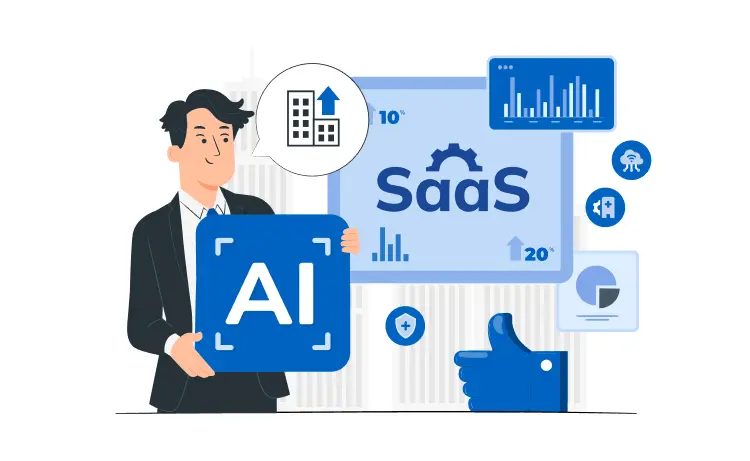
A common fear echoes through the tech world: “AI will replace developers.” While the role of software developers is undoubtedly evolving with the rise of artificial intelligence, this widely held belief might be misdirected. The true disruption, the seismic shift that AI is poised to unleash, isn’t primarily aimed at the coders themselves. It’s coming for the Software-as-a-Service (SaaS) industry.
The AI Tsunami: Why SaaS, Not Developers, Is Next in Line for Disruption
The Illusion of Developer Replacement
For months, headlines have speculated about AI writing code, automating tasks, and potentially rendering human developers obsolete. And yes, AI can now generate impressive snippets of code, debug efficiently, and even assist in architectural design. These capabilities are transformative, making developers more productive and empowering those with less coding experience. However, the nuanced problem-solving, creative ideation, and complex system design that define a senior developer’s role remain firmly in the human domain. AI is a powerful co-pilot, not a complete replacement.
The Real Target: SaaS’s Vulnerable Underbelly
If AI isn’t coming for developers first, then who is? Consider the ubiquitous SaaS model. We pay $10, $50, even $100 per month for tools that perform relatively basic, standardized functions: project management, CRM, email marketing, simple analytics, and so on. These tools, while convenient, are often rigid, bloated with features you don’t use, and rarely perfectly align with your unique workflow.
Now, imagine a world where AI can build software in minutes. Not just code snippets, but fully functional, custom applications tailored precisely to your needs. Why would you continue to pay a recurring subscription for a generic tool when an AI can generate a bespoke solution on demand, potentially for a fraction of the cost or even free after an initial setup?
The Looming Subscription Apocalypse
When AI can generate custom apps on demand, the very foundation of subscription models begins to crumble. The value proposition of SaaS is convenience and accessibility to pre-built solutions. But if AI makes custom solutions equally convenient and accessible, the need for those off-the-shelf subscriptions diminishes rapidly.
Right now, SaaS companies are still thriving. Their quarterly reports boast impressive growth, and venture capital continues to pour into the sector. There’s a calm before the storm, a period where the market hasn’t fully grasped the implications of truly democratized software creation. But this calm won’t last long.
The Democratization of Software Creation
Once AI democratizes software creation, everything changes. Small businesses will no longer be constrained by budget limitations for specialized software. Individuals can build personal tools to manage their lives or hobbies. Niche communities can create highly specific applications without needing a team of developers or a massive budget. This isn’t just about efficiency; it’s about empowerment. It shifts power from large software vendors to the end-user, enabling unprecedented levels of customization and innovation.
Grasping the Shift: Build Your Own
The only way to truly grasp this impending shift, to understand its profound implications beyond theoretical discussions, is to experience it firsthand. Start building custom workflows for your personal use. Experiment with AI tools that generate code or even entire applications. Try to automate a repetitive task in your daily life by prompting an AI to create a small script or a simple web app.
As you witness the speed and adaptability of AI in creating functional software, the vision of a post-SaaS world will become clearer. It’s not about AI replacing humans, but about AI replacing the need for standardized, mass-produced software, ushering in an era of hyper-personalized digital tools. The future of software is custom, and AI is the architect.